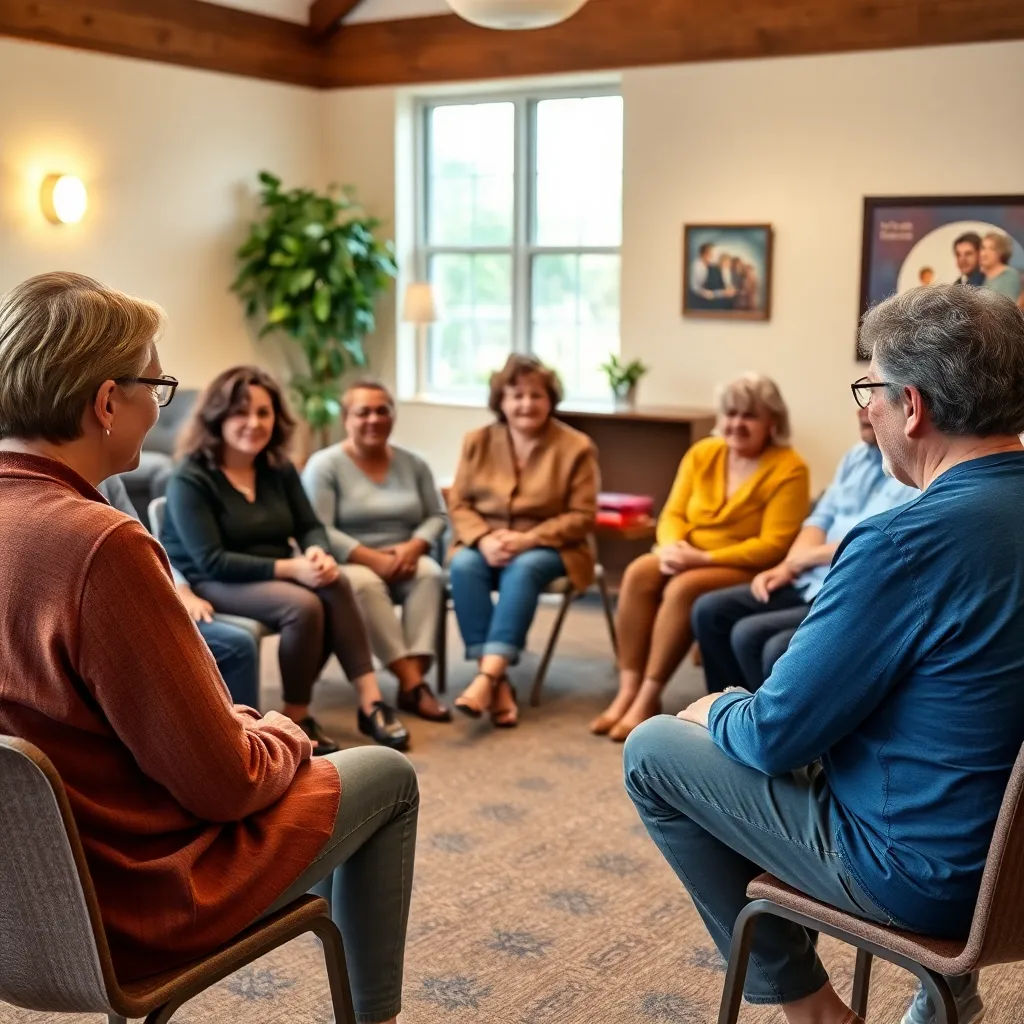
Massachusetts Recovery Community: Sober Support Across the Commonwealth
Massachusetts has one of the most developed recovery communities in New England. Find peer support centers, sober living homes, recovery coaching, and community organizations.
Recovery from addiction is built on community. This is not a philosophical preference — it is an empirical finding. The Substance Abuse and Mental Health Services Administration (SAMHSA) consistently identifies social support, meaningful activity, and community connection as among the most powerful predictors of long-term recovery. The period immediately after formal treatment ends carries the highest relapse risk, and the presence or absence of ongoing peer support is one of the factors that most powerfully determines what happens next.
Massachusetts has invested substantially in its recovery community infrastructure — more than most states. The Commonwealth has recovery community centers, well-organized peer support networks, statewide recovery housing standards, an active recovery advocacy movement, and one of the most established collegiate recovery program networks in New England. Whether you are leaving treatment for the first time or years into recovery and looking to strengthen your support network, Massachusetts has resources for you.
Why Recovery Support Services Matter
NIDA characterizes addiction as a chronic brain disorder with a relapse pattern similar to conditions like hypertension and asthma — conditions that require ongoing management and support, not just a single treatment episode. Recovery support services are the ongoing management component of addiction treatment.
Research cited by SAMHSA shows:
- People who participate in mutual support groups after treatment have significantly better 12-month and long-term sobriety outcomes
- People who transition to recovery housing after residential treatment have better outcomes than those who return directly to prior environments
- Employment and social connection are independent predictors of sustained recovery
The Massachusetts Bureau of Substance Addiction Services (BSAS) funds recovery support services as part of its statewide behavioral health system — recognizing that treatment alone is insufficient.
Sober Living Homes in Massachusetts
Massachusetts Alliance for Sober Housing (MASH)
Massachusetts has a statewide certification system for recovery residences, administered by the Massachusetts Alliance for Sober Housing (MASH), operating under the National Alliance for Recovery Residences (NARR) standards. Massachusetts law and BSAS policy require that publicly funded clients be placed in MASH-certified homes — a reform that addressed substandard and predatory sober home practices that affected Massachusetts communities.
MASH-certified homes meet standards for safety, management, tenant rights, and recovery support orientation.
mashsoberhousing.org — searchable directory of certified recovery residences
Recovery Residence Levels in Massachusetts
MASH uses the NARR four-level framework:
- Level 1 (Peer Run): Democratically operated peer-run homes
- Level 2 (Monitored): Staff oversee house operations
- Level 3 (Supervised): On-site clinical services or close coordination
- Level 4 (Service Provider): Clinically managed residential support
For most people transitioning from residential treatment, Levels 2 or 3 provide the right balance of structure and autonomy.
Cost and Funding for Sober Living
Recovery residences are generally not covered by health insurance. Residents pay weekly rent — in Massachusetts, typically $150–$350 per week depending on location and level, with Greater Boston on the higher end and Western Massachusetts on the lower end.
Some MASH-certified homes have scholarship funds or sliding-scale arrangements. BSAS-funded programs may include transitional housing assistance — contact the Massachusetts Substance Use Helpline (1-800-327-5050) about available housing supports.
Oxford Houses
Oxford Houses are self-supporting, democratically run sober living homes with chapters throughout Massachusetts — including Boston, Worcester, and Springfield. Residents govern themselves and cover their own costs (typically $100–$150 per week). No formal referral required.
oxfordvacancies.com — searchable national database
Mutual Aid and Peer Support Groups
Alcoholics Anonymous (AA) in Massachusetts
AA has an extensive and deeply established presence in Massachusetts, particularly in Boston where the recovery community has decades of history. The New England Region of AA has thousands of meetings per week — in person throughout all Massachusetts counties, and virtually.
- Boston Central Service Office: bostonaa.org
- Massachusetts AA Intergroup listings: aa.org
Narcotics Anonymous (NA)
NA is active throughout Massachusetts with strong meeting networks in Boston, Worcester, Springfield, and beyond.
na.org — meeting finder
SMART Recovery
SMART Recovery (Self-Management and Recovery Training) uses CBT and motivational principles. Massachusetts has chapters in multiple locations, with strong online meeting options for those in rural areas or with scheduling constraints.
smartrecovery.org
Learn to Cope
Learn to Cope is a Massachusetts-specific peer support organization founded by parents affected by the opioid crisis. It focuses on family support but also provides peer connection and recovery advocacy for people in recovery. Particularly strong in its eastern Massachusetts presence and its naloxone training programs. This is one of the most well-organized and impactful recovery community organizations in the Commonwealth.
learntocopema.org
Celebrate Recovery
Christian-based recovery support groups offered at churches throughout Massachusetts. Particularly active in Central and Western Massachusetts.
Refuge Recovery and Recovery Dharma
Buddhist-informed, secular recovery communities with Massachusetts chapters in the Boston area and online options statewide.
Recovery Community Organizations (RCOs) in Massachusetts
RCOs are nonprofit organizations led and governed by people in recovery. They provide peer coaching, advocacy, employment support, housing navigation, and community programming.
Gavin Foundation: One of Massachusetts’s oldest recovery organizations, serving South Boston and the surrounding community for decades. Provides comprehensive recovery support including housing and employment services. gavinfoundation.org
The Recover Project: Based in Greenfield, Massachusetts, serving Western Massachusetts with recovery coaching, peer support, and a sober community center. recoverproject.org
Common Pathways: Based in Northampton, providing peer-based recovery support in the Pioneer Valley. commonpathways.org
North Shore Recovery High School / Recovery Support Programs: Massachusetts is home to several recovery-oriented educational programs, including Recovery High School programs in Boston and other communities, allowing young people in recovery to complete high school in a supportive, drug-free environment.
Massachusetts Organization for Addiction Recovery (MOAR): A statewide recovery advocacy organization led by people in recovery. Provides advocacy, peer support, and connection to the recovery community. ma-recovery.org
Peer Recovery Support Services (PRSS) Network: The Massachusetts BSAS has expanded the PRSS workforce significantly. Certified Peer Specialists work in hospitals (bridge programs), drug courts, community health centers, and RCOs throughout the state.
Recovery Community Centers
Massachusetts has invested in brick-and-mortar recovery community centers — physical spaces where people in recovery can access peer support, recovery coaching, social activities, employment services, and community connection.
Gavin Foundation’s Recovery Community Centers: Multiple sites in South Boston and surrounding areas.
The Recover Project’s Community Space: In Greenfield, Western Massachusetts.
MRM’s (Massachusetts Recovery Ministries) Centers: Multiple locations in the Boston area.
Providers’ Council: The statewide association of human services organizations in Massachusetts includes many addiction treatment providers with recovery community programs.
Recovery community centers serve as drop-in spaces — you do not need to be enrolled in a program to use them. Many offer free meals, computer access, support groups, and social activities in addition to peer support.
Collegiate Recovery Programs
Massachusetts’s extraordinary density of colleges and universities means that collegiate recovery programs — designed to support college students in recovery — are an important part of the recovery landscape.
Massachusetts colleges with established recovery programs or recovery housing include:
- University of Massachusetts Amherst: One of the stronger collegiate recovery programs in New England
- Northeastern University: Recovery support and community
- Boston University: Recovery resources and support groups
- Bridgewater State University: Collegiate recovery program
The Association of Recovery in Higher Education (ARHE) lists Massachusetts collegiate recovery programs at collegiaterecovery.org.
Employment in Recovery
Employment is a major predictor of sustained recovery. Massachusetts has several resources:
Massachusetts Rehabilitation Commission (MRC): Provides vocational rehabilitation services — job training, placement support, assistive technology — for people with disabilities including those in recovery from SUD. mass.gov/mrc
Massachusetts American Job Centers: Statewide employment services, with specific capacity to serve people with barriers to employment. One-stop career centers are located in every region.
Roca: A Massachusetts organization serving young people involved in the criminal justice system and in recovery with employment training and support. rocainc.org
Social enterprises: Several Massachusetts organizations run social enterprises that provide employment to people in recovery — including cleaning services, food businesses, and more. Ask your recovery community organization or treatment provider for referrals.
Digital and Online Recovery Support
For Marylanders in rural areas, with mobility limitations, or who prefer virtual connection:
- In the Rooms: Large virtual recovery meeting community, intherooms.com
- SMART Recovery Online: Free online meetings available 24/7
- AA Online Intergroup: aa-intergroup.org
- Tempest: An online community for people in alcohol recovery
- Massachusetts Substance Use Helpline: 1-800-327-5050 — available 24/7 for connection and referral
The Role of Family in Long-Term Recovery
Recovery is most durable when it is embedded in healthy relationships. Massachusetts has strong family support resources that can help family members support recovery without enabling:
- Learn to Cope: learntocopema.org — family peer support across Massachusetts
- Al-Anon: al-anon.org
- CRAFT-informed family therapy: Available through licensed counselors statewide
Get Help Today
Long-term recovery is built one day at a time, in community. Massachusetts has the infrastructure to support that journey — from peer support centers and sober living to recovery coaching and employment services. Our Massachusetts Addiction Hotline can connect you with the recovery community resources that are right for your situation, wherever you are in the Commonwealth.
Call our Massachusetts Addiction Hotline today. Recovery is a community endeavor — and we are part of yours. Available 24/7, free, and confidential.
Continue Reading

Alcohol Use Disorder in Massachusetts: Recognizing the Signs and Getting Help
Alcohol is the most used addictive substance in Massachusetts. This guide covers how to recognize alcohol use disorder, understand dependence vs. abuse, and access evidence-based treatment.
Using MassHealth for Addiction Treatment: What Massachusetts Residents Need to Know
MassHealth covers comprehensive substance use disorder treatment including inpatient detox, residential treatment, MAT, and outpatient programs. Learn how to use your benefits.